How to Deal With People When You’re Winning
Chris Jarvis x Tim Castle (Tim Castle Live / Be the Giraffe Series)
Success changes you.
But what really surprises most people is how much it changes the people around you.
In this episode of The Tim Castle Show, Tim Castle continues his mini-series with Chris Jarvis, author of Be the Giraffe, to unpack a tough (and super common) reality:
When you start leveling up—more confidence, more clarity, more wins—friends, family, and even your inner circle don’t always celebrate it.
So what do you do when you’re growing… and the people around you are uncomfortable with your growth?
This conversation gives a real, mature answer—without turning you into a jerk or asking you to shrink back down.
The Question Everyone Feels (But Rarely Says Out Loud)
Tim frames it perfectly:
When you become more of who you are—when you’re rising into your strengths—how do you deal with people who aren’t happy for you?
Do you bring them with you? Do you distance yourself? Do you explain yourself?
Chris doesn’t pretend it’s easy. In fact, he starts with honesty:
He handled it badly at first.
That’s what makes this episode so useful—because it shows the evolution from reacting emotionally… to responding with wisdom.
The “Winning” Trap: Superiority, Frustration, and the Need to Be

Understood
Chris describes three phases many high-achievers go through:
The superiority phase
“I’m moving forward and you’re stuck.”
It’s not healthy, but it’s common when you’re trying to protect your new identity.The frustration phase
“Why can’t you see what I see?”
This is where you keep trying to convince people—and keep getting hurt.The grounded phase
“I understand where this is coming from… and I don’t need validation to keep moving.”
That third phase is the goal.
And Chris offers a powerful rule that changes everything:
When someone is truly confident in what they believe, they don’t need to convince you.
If someone is constantly trying to convert you into their mindset, it often reveals their insecurity—not your mistake.
He uses a real-life example: he has devout Christian friends, and the ones with the strongest faith don’t pressure him. They focus on shared values, not forced agreement.
The Big Shift: Stop Hearing the Words—Start Hearing the Intention
This might be the most practical takeaway of the episode.
Chris explains that when people say things like:
“Are you sure that’s a good idea?”
“Most businesses fail.”
“What about the risk?”
“It must be nice…”
It’s easy to take it as an attack.
But most of the time, it’s not hate. It’s fear—sometimes fear for you, sometimes fear in them, and sometimes fear of losing you.
He shares a personal story about adopting his stepchildren. Even his dad expressed concern—then apologized the next day. Chris’s response was the maturity play:
“I hear your love and concern, not disapproval.”
That’s the mindset upgrade:
Don’t get hooked by the comment—look for the motive underneath it.
The “Guilt of Success” Is Real (And It’s Everywhere)
Chris tells a story from a workshop with high-level financial advisors. He asked:
“How many of you feel guilty sharing your success with certain people in your life?”
Nearly everyone raised their hand.
That’s a big deal—because it normalizes what so many winners carry quietly:
You want to grow, but you don’t want to make other people feel small.
This episode helps you stop turning your success into something you need to apologize for.
A Line That Hits Hard
Chris says it directly:
“If you listen to the voices in the herd, you will stay in the herd.”
Because your beliefs will eventually match the loudest environment you spend time in.
Hang around people who think $100k is “impossible,” and you’ll absorb that ceiling.
Spend time with people who believe bigger outcomes are doable, and your nervous system starts to accept bigger realities.
Your circle doesn’t just influence your mood—it influences your limits.
Lions, Hyenas, and the Tower You Build
Tim brings up a chapter from Be the Giraffe: Beware of Lions and Hyenas.
Chris expands the idea:
Even if you’re working on thicker skin and better perspective… you still shouldn’t keep putting yourself in harmful environments.
He gives a simple analogy:
A recovered alcoholic might be strong—but they still don’t hang out in bars.
Translation:
Yes, grow your capacity. But also protect your progress.
And this is where Tim lands the conclusion beautifully:
You build the “tower”—the environment and people that help you rise.
Not everyone gets access to you at the same level when you’re changing your life.
Key Takeaways
People’s reactions to your success often reflect their fear, not your failure
Stop trying to convince people who are committed to misunderstanding you
Learn to read intention, not just words
You don’t need to shrink to stay connected
Your environment shapes your beliefs—choose it on purpose
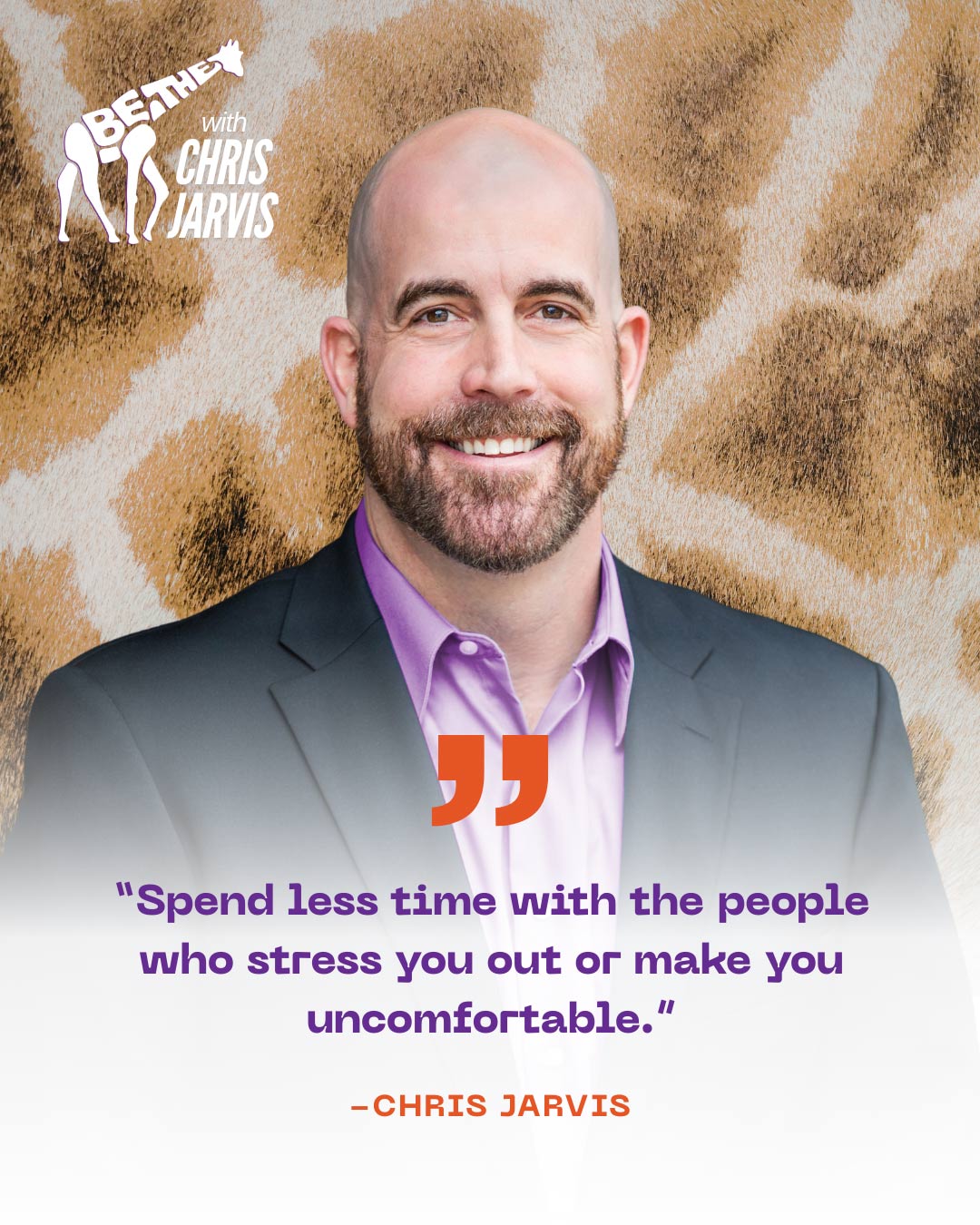
Build your tower: spend more time with people who elevate, not drain
Final Thought
Winning isn’t just about achievement—it’s about identity.
And when your identity changes, relationships either stretch… or strain.
This episode doesn’t tell you to cut everyone off.
It teaches you something better:
Understand what’s really happening, stop taking fear personally, and keep moving forward—with clarity and kindness.


