How to Find Your Wild Factor and Really Start Living
Chris Jarvis x Tim Castle Mini Series (Tim Castle Live)
Most people don’t need more motivation.
They need clarity—about what actually makes them feel alive, what they’re built to do, and what they keep sacrificing without realizing it.
In this episode of Tim Castle Live, Tim Castle sits down again with Chris Jarvis (Be the Giraffe) to explore the idea of your “Wild Factor”—a simple but powerful way to understand your behaviors, your blind spots, and the patterns that quietly shape your health, career, relationships, finances, and fun.
This conversation is equal parts personal development and practical strategy: how to use what you’re already good at to fix what you keep neglecting—without forcing yourself into someone else’s definition of success.
The Line That Sets the Tone: “Have a Huge Heart”
Tim opens with one of his favorite ideas from Be the Giraffe:
“Add greater weight to the projects that touch our hearts.”
That one line becomes a decision-making filter:
Does this choice touch my heart—or just my ego, fear, or habit?
From there, Tim brings up Chris’s assessment tool and shares something relatable: he took the Wild Factor quiz, scored as a Monkey, then retook it later and came back as a Penguin—with similar strengths showing up (fun + relationships) and similar weak areas (career + health).
And that becomes the heart of the episode:
If your strengths are “fun + people,” how do you use those strengths to improve the areas you’re not handling well?
What the Wild Factor Actually Measures (And Why That Matters)
Chris gives important context: the point isn’t to label you—it’s to reveal how you’re currently living.
He explains the problem he sees everywhere:
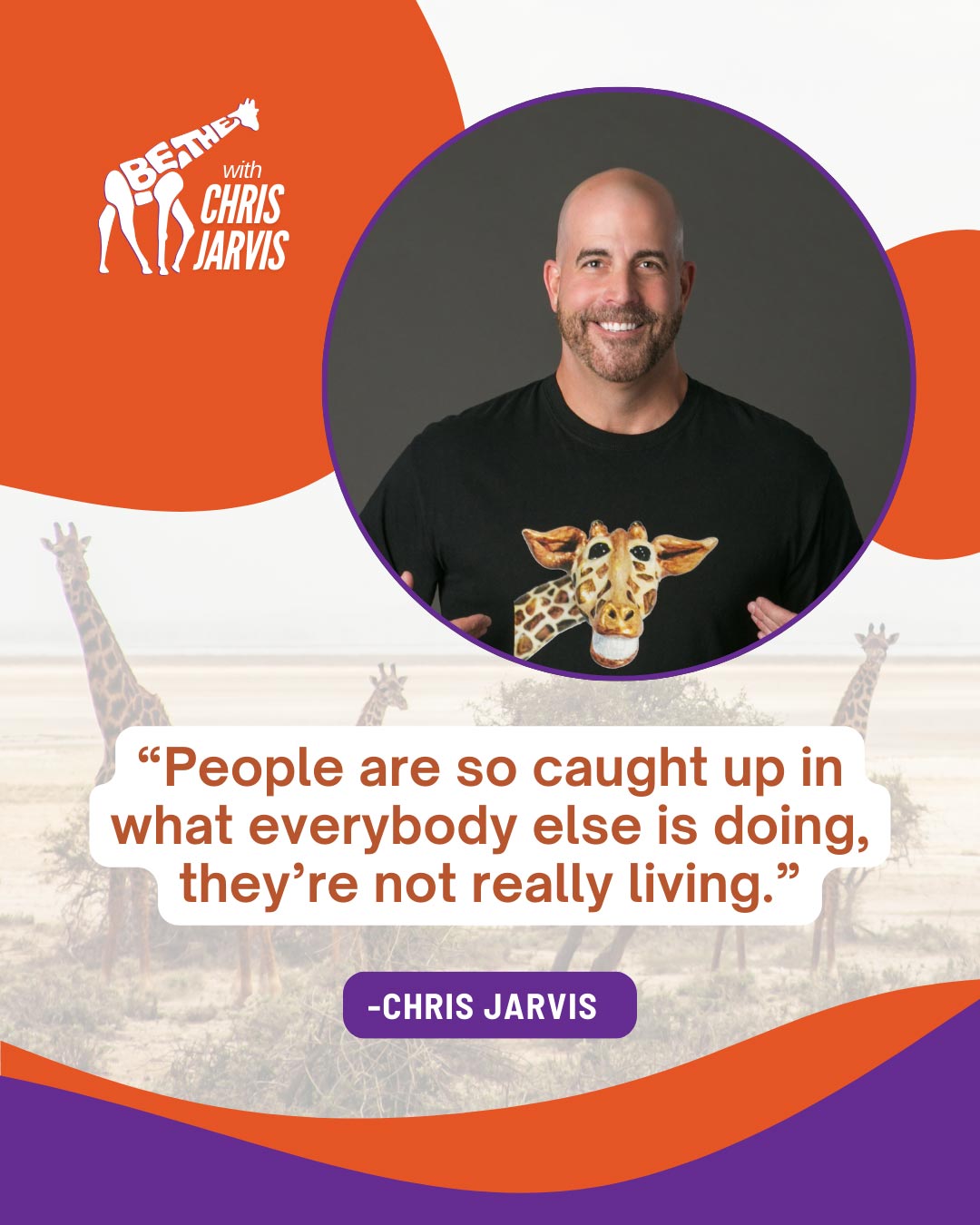
People are so busy tracking what everyone else is doing—scrolling, comparing, chasing FOMO—that they’re not actually living.
So he built the Wild Factor around behaviors, not preferences.
Because lots of people say:
“Family is my priority.”
“Health matters to me.”
“I want balance.”
…but their calendar and habits tell a different story.
That’s why the Wild Factor looks at five life areas:
Finances
Career
Health
Relationships
Fun
And ties them to five animal archetypes:
Eagle, Elephant, Monkey, Dolphin, Penguin.
The genius isn’t just the animals—it’s what the scores mean.
The Monica Story: Your “Top Score” Isn’t What You Love—It’s What Runs Your Mind
Chris shares a story about testing his quiz with executives. Everyone loved it… until one person didn’t.
Monica looked at her results and basically told him:
“This is wrong. Your test is trash.”
Instead of reacting, Chris asked better questions—about her upbringing, money beliefs, and behavior patterns. That’s when the insight landed:
Your highest score doesn’t always mean “this is what you value most.”
It often means this is the loudest voice in your head.
So if someone scores high in finances (Eagle), it doesn’t automatically mean they’re greedy—it may mean money is the dominant lens they run decisions through.
And a high Relationships score (Penguin) doesn’t mean you’re “soft.” It means you naturally ask:
How will this affect the people around me?
What will others think?
Will I disappoint someone?
That kind of awareness changes everything.
The Most Important Part: Your Lowest Score Is What You Sacrifice First
Chris explains the piece most people miss:
Your lowest score isn’t what you don’t care about.
It’s what you sacrifice first when life gets busy.
And because health and fun aren’t easily measurable, people tend to sacrifice them for what is measurable—money and work.
This is where the Wild Factor becomes less “personality test”… and more life strategy.
How to Use Your Strength to Fix Your Weak Spot
Here’s the episode’s main “aha”:
Don’t fight your wiring—hack it.
If you’re a Penguin (relationships-driven) and health is low, you might not work out alone… but you will show up if friends are counting on you.
So instead of relying on discipline, you leverage your social strength:

sign up for a hike with friends
join a challenge together
schedule a recurring “movement hang”
commit publicly so you don’t ghost it
Same with career. If you’re strong in relationships and fun:
network in rooms that actually expand your career
build collaborations that open doors
choose “fun” environments that still align with your goals (events, communities, creative projects)
The key isn’t doing random “weird stuff.”
It’s doing the right weird stuff—the kind that pulls your lowest score upward.
A Brilliant Leadership Lesson Hidden Inside This Episode
Chris drops a business truth that hits hard:
We understand at home that different kids need different approaches…
but in business we use one message, one handbook, one system, and expect everyone to respond the same.
The Wild Factor helps you understand the lens people use to decide:
Eagles look for ROI
Dolphins look for health/well-being improvements
Penguins look for social impact and belonging
Monkeys look for enjoyment and experience
So instead of blasting one message to everyone, you can segment communication to match how people naturally process decisions.
Not manipulation—clarity.
The Gift-Giving Strategy That’s Actually About Influence
One of the best practical examples:
Chris says don’t “gift” someone based on their strength. Gift them based on their lowest score.
Because your highest score is something you already do for yourself.
So instead of expensive, generic gifts (wine, baskets, luxury items), he gives the example of sending a $3 wind-up monkey toy to someone whose lowest score is fun—plus a note like:
“What fun are we going to have?”
That’s personal. That builds connection. That changes behavior.
Key Takeaways
Your Wild Factor is about behaviors, not identity labels
Your highest score is often your loudest inner voice
Your lowest score is what you sacrifice first
You don’t need to become someone else to improve—you need to leverage what you already are
The fastest growth comes from “strength → weak spot” strategies
Better relationships (with yourself and others) start with better context
Final Thought
This episode isn’t just about finding your Wild Factor.
It’s about finally living with intention—so your days aren’t ruled by FOMO, pressure, and default habits… but by choices that actually move your whole life forward.
Because when you know what drives you—and what you keep sacrificing—you can stop drifting… and start living.


